
Indian classical arts have developed through centuries of teaching, practice and transmission between Guru and Shishya. The tradition is closely associated with texts such as the Natya Shastra, attributed to Bharata Muni, which describes principles of movement, expression, music, gesture and dramatic presentation. Over time, these principles developed through regional traditions and distinct Gharanas, giving each form its individual vocabulary and character.
Kathak developed across North India through traditions of storytelling, music and movement. The form came to be associated strongly with the Lucknow Gharana, known for its expression, graceful movement and detailed presentation. Knowledge of the form has been passed through generations through sustained training and personal teaching.
It was within this tradition that Lele’s Kalanand Nritya Sanstha began its work in 1992, when Guru Bhavana Lele started teaching Kathak with just two learners. Her aim was to provide thorough practical and theoretical knowledge while introducing them to the art form in its pure form.
Over three decades later, Kalanand has centres in Thane and Pune and has trained 20,000+ learners. Regular classes, practice and theoretical learning remain central to the curriculum. Learners also appear for examinations conducted by Gandharva Mahavidyalaya, with many progressing towards Kathak Visharad certification.
At the centre of its teaching is Guru Bhavana Lele, an exponent of the Lucknow Gharana. Her learning also includes the teachings of renowned Kathak maestros Pandit Birju Maharaj and Shri Munnalalji Shukla. Their contribution to Kathak has helped shape generations of practitioners and has given the Lucknow tradition a prominent place in India’s classical arts.
Kathak education also involves understanding abhinaya, the expressive aspect of the form, along with mudras, footwork, compositions, musical accompaniment and the amalgamation between rhythm and expression. The curriculum provides exposure to these aspects alongside regular practice, helping learners develop a comprehensive understanding of their chosen art form.
The institute also gives learners opportunities to learn about folk traditions, music, theatre and other Indian art forms through workshops. These programmes introduce young learners to India’s diverse cultural practices and provide an educational experience alongside their Kathak training.
As disciples progress, opportunities to perform become an important part of their education. Presenting before an audience allows them to apply their learning, work with musicians and understand the discipline required for a complete stage presentation. Lele’s Kalanand has therefore developed a range of programmes that bring artists, teachers and audiences together.
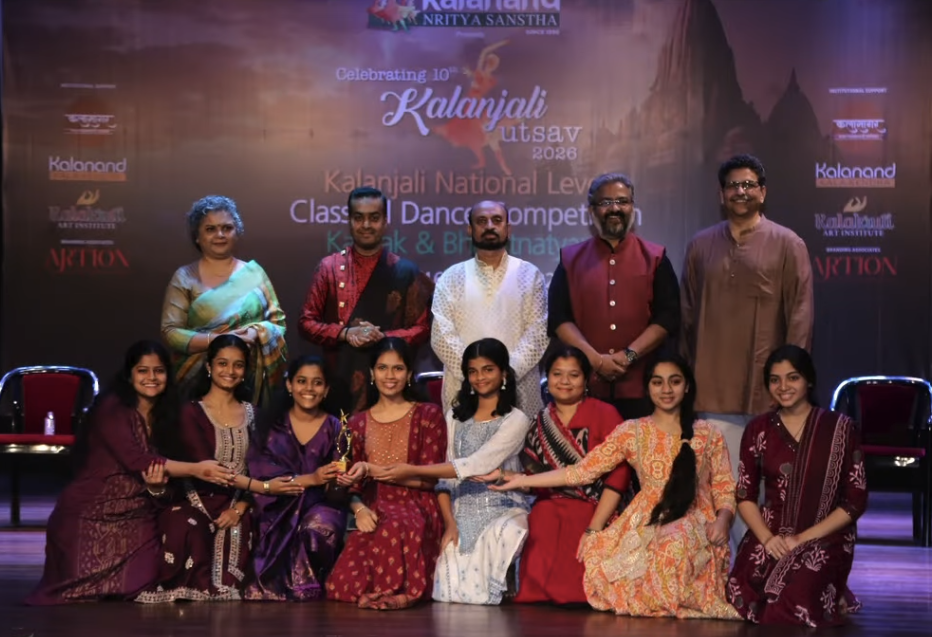
Among these is Kalanjali Utsav, which has completed ten editions and has become an annual platform for Kathak and Bharatanatyam practitioners. The festival has featured established artists, emerging practitioners and musicians, while giving young learners an opportunity to experience Indian arts in a live setting.
Kalanand’s annual programmes also include Guru Purnima Utsav, Nritya Vividha and multi-art youth workshops. Nritya Vividha brings forms such as Kathak, Bharatanatyam, Odissi and Kuchipudi into one programme, while the youth workshops introduce participants to folk arts, music, traditional painting and other Indian art forms.
The institution has taken Kathak to audiences across India and international stages, with 200+ performances, 50+ awards and recognitions, and 20,000+ students trained. These milestones represent the scale of its work and the many people who have contributed to its growth over the years.
The 10th Kalanjali Utsav 2026, taking place between 13 and 16 August 2026, adds another chapter to this work, bringing together Kathak and Bharatanatyam practitioners through a national-level arts competition and festival. For young artists, such platforms offer an opportunity to present their training, meet fellow practitioners and experience the larger cultural space that exists beyond regular learning.
For the institution, the years ahead hold the opportunity to take this work further. Indian classical arts have travelled through centuries of change, adapting to new audiences, new stages and new generations while retaining their essential knowledge. The future of these forms will depend on how successfully this knowledge reaches young practitioners and finds relevance in the cultural life of tomorrow.
Lele’s Kalanand Nritya Sanstha stands at this point between past and future. What began with a few disciples has grown into a community of thousands, and the next generation will carry this work ahead through their learning, practice and presentation of Kathak. The tradition has its history. Its tomorrow is waiting to be created.
For more details, visit: www.kalanand.com | info@kalanand.com
